Robotics research at Stanford
Wang earned his PhD in mechanical engineering at Stanford University in 2017, advised by Mark Cutkosky and Oussama Khatib. His thesis studied how human-scale robots can climb and cross rough terrain, using a force-sensing hiking staff and hands covered with arrays of tiny spines.1
He also co-wrote the 2017 paper on the hands of Ocean One, Stanford's underwater humanoid robot, which used adaptive designs for robust grasping in the ocean.2
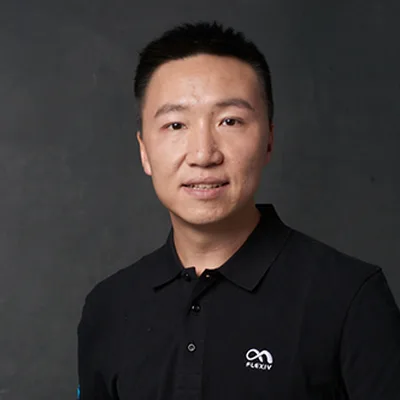
Founding Flexiv
Wang co-founded Flexiv in 2016 with a team from Stanford's robotics and AI lab. The company opened its Shanghai headquarters in 2018 and now has about 400 staff.3
When Flexiv announced its Invus-led round in March 2026, he said the goal had always been to build robots that can operate in the real world and solve problems traditional automation cannot.4
The goal has always been to build robots that can operate in the real world and solve challenges that traditional automation cannot.Flexiv press release, March 18, 2026
Links
Sources
- Stanford Digital Repository, Traversing highly-varied terrain, Shiquan Wang, PhD thesis, 2017, accessed November 4, 2026
- The International Journal of Robotics Research, The Ocean One hands: An adaptive design for robust marine manipulation, 2017, accessed November 4, 2026
- HKTDC Research, Self-developed adaptive robot unicorn looking to go global, accessed November 4, 2026
- Flexiv, Flexiv secures capital from leading evergreen investor, March 18, 2026, accessed November 4, 2026
Photo: Flexiv website.